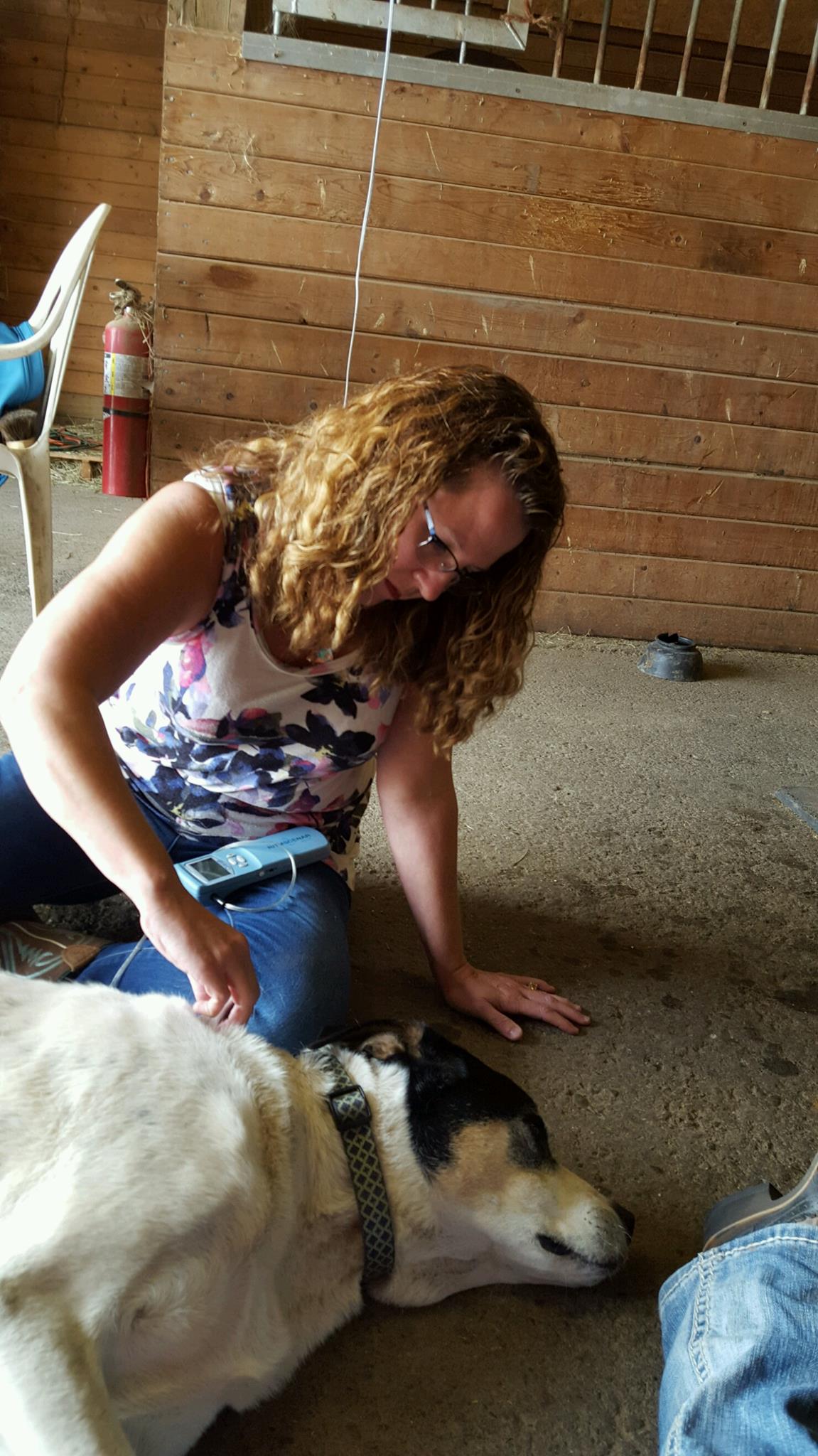
Understanding the Silent Language: A Guide to Your Pet's Well-being
Understanding the Silent Language: A Guide to Your Pet’s Well Being
Have you ever looked at your dog, cat, or horse and felt they were trying to tell you something, but you could not quite put your finger on it?
Maybe your dog suddenly follows you more closely.
Maybe your cat has started hiding in places they never used before.
Maybe your horse pins their ears, swishes their tail, or hesitates under saddle, and something in your gut says, “This is not just attitude.”
Animals communicate all the time. They speak through posture, movement, appetite, energy, eyes, breathing, tension, restlessness, and subtle shifts in behavior. Their language is quiet, but it is not random.
Understanding our animals requires a blend of behavioral observation, nervous system awareness, body language, and intuitive listening. While many people wait for obvious signs of illness or distress, animals often begin communicating through small signals long before a problem becomes visible.
These small signals matter.
They are the whispers before the shout.
Why Subtle Signals Matter
Animals are naturally wired to hide vulnerability. In the wild, showing pain, weakness, or distress could make an animal more vulnerable. Even our beloved pets and performance animals still carry some of that instinct.
This means your animal may not clearly show discomfort until the issue has already progressed.
That is why paying attention to micro signals is so important.
A micro signal is a small change that may seem insignificant at first. It might be a change in appetite, sleep, movement, mood, grooming, posture, or social behavior. One small sign does not always mean something serious is wrong, but a pattern of changes can tell a much bigger story.
When you learn to notice these early shifts, you become a better advocate for your animal.
You do not need to panic over every little change. You simply need to observe with clarity.
Recognizing Subtle Shifts Across Species
Animals often experience changes in their nervous system before visible illness or discomfort becomes obvious. These early indicators of imbalance can show up as changes in appetite, altered sleep patterns, restlessness, clinginess, hiding, irritability, hyper vigilance, or changes in how they interact with people and other animals.
Some animals become louder.
Some become quieter.
Some become needier.
Some withdraw.
Some act out.
And sometimes the behavior we label as stubborn, naughty, dramatic, or difficult is actually communication.
The key is to ask better questions.
What changed?
When did it start?
Is this behavior new?
Does it happen at a certain time, with a certain person, in a certain environment, or during a certain activity?
Is the animal reacting emotionally, physically, or energetically?
Those questions open the door to deeper understanding.
For Dogs: When Behavior May Be a Message
Dogs often communicate distress through movement, sound, breathing, and attachment behavior.
A dog who pants while resting in a cool room may be showing more than simple warmth. Panting can sometimes be connected to anxiety, pain, medication effects, cardiac stress, or other internal discomfort. A dog who licks their lips when not eating, yawns excessively, paces, trembles, or avoids eye contact may be trying to regulate stress.
Separation anxiety is another common area where behavior is often misunderstood.
A dog who barks, cries, chews, scratches, soils the house, or panics when left alone is not necessarily being “bad.” They may be experiencing real fear. Their nervous system may be reacting as if safety has disappeared when their person leaves.
Other subtle dog signals may include:
Changes in how they greet you
Refusing a favorite treat
Sleeping in a different location
Sudden clinginess
Reluctance to climb stairs
Hesitating before jumping into the car
Excessive licking of paws or body
A change in facial expression or eye softness
A dog’s body often tells the truth before the behavior becomes dramatic.
For Cats: The Masters of Quiet Communication
Cats are experts at subtle communication. They may not always cry out, limp dramatically, or make their discomfort obvious. Instead, they may shift their routine in tiny ways.
A cat who stops grooming, develops matted fur, or looks less tidy may be dealing with pain, stiffness, dental issues, fatigue, or emotional stress. Reduced jumping, hiding more often, sitting in a hunched position, or tucking the abdomen can sometimes appear before more obvious illness.
Cats may also communicate discomfort through changes in litter box habits, appetite, vocalization, or social behavior.
A normally social cat may start hiding.
A normally independent cat may become unusually clingy.
A playful cat may stop playing.
A quiet cat may begin vocalizing more.
A cat who suddenly avoids being picked up, touched, or brushed may be trying to protect an area that hurts.
Because cats are so subtle, it is important to take small behavior changes seriously, especially when they continue for more than a day or two.
With cats, the whisper is often the whole message.
For Horses: Behavior Under Saddle Is Often Communication
Horses are deeply expressive animals, but their communication is often misunderstood.
What looks like defiance under saddle may actually be discomfort. Pinned ears, tail swishing, head tossing, girthiness, bracing, bucking, refusal, stiffness, or resistance can all be ways a horse says, “Something does not feel right.”
A horse may respond to pain, saddle fit issues, dental discomfort, back soreness, hoof imbalance, digestive distress, emotional tension, rider imbalance, or environmental stress.
Horses are also highly sensitive to the emotional state of the people around them. They notice tension, uncertainty, frustration, grief, rushing, and fear. Their nervous systems are designed to read the field around them. This is part of what makes them extraordinary partners, teachers, and healers.
Subtle equine signals may include:
A change in eye softness
Jaw tension
Holding the breath
Change in stride length
Loss of forward movement
Difficulty bending one direction
Moving away when approached with tack
Flinching during grooming
Unusual herd behavior
Increased spookiness
When a horse changes behavior, it is rarely “for no reason.” The reason may not be obvious yet, but the communication is there.
The Human Animal Connection
Animals do not live in isolation from us. They co regulate with the humans in their lives.
This means they can respond to household tension, grief, illness, schedule changes, moving, new people, new animals, family conflict, or emotional stress in the home.
Sometimes animals mirror our stress.
Sometimes they absorb the atmosphere around them.
Sometimes they react to their own internal discomfort.
Sometimes they are responding to both.
This does not mean you caused your animal’s anxiety or illness. It simply means the relationship is connected. Animals are sensitive beings. They often notice what humans try to push aside.
Before you try to interpret your pet’s behavior, it helps to regulate yourself first.
Take a breath.
Soften your shoulders.
Relax your jaw.
Let your body settle.
When you observe from a calmer state, you are less likely to project fear onto the animal. You are more able to notice what is actually happening.
Calm observation creates a clearer interpretation.
Intuitive Observation: Listening Beyond Words
Intuitive animal communication is not about guessing wildly or making dramatic claims. At its best, it is a quiet process of noticing.
You observe the body.
You notice the behavior.
You listen to the emotional tone.
You pay attention to patterns.
You sense what feels different.
You allow information to emerge without forcing it.
Sometimes an intuitive impression may come as a feeling, image, word, body sensation, emotional tone, or sudden knowing. These impressions should be held with care and grounded in practical observation.
For example, if you sense sadness from your dog, you might also notice they are sleeping more, eating less, and less interested in play.
If you sense tension from your horse, you might also notice tightness around the eye, resistance under saddle, or sensitivity during grooming.
If you sense discomfort from your cat, you might also notice changes in grooming, jumping, or litter box behavior.
The intuitive and the practical can work together beautifully.
That is where clarity lives.
Download the Enhanced Pet Communication Guide
If you want a simple way to begin tracking your animal’s subtle signals, download the Enhanced Pet Communication Guide.
This guide includes a checklist of subtle signs for dogs, cats, and horses so you can monitor changes with more confidence and compassion.
Use it to notice patterns, prepare better questions for your veterinarian, and deepen your connection with your animal.
[Form: Name | Email | Download Now]
When to Seek Professional Help
Intuitive awareness is powerful, but it does not replace veterinary care.
If your animal shows signs of sudden lethargy, difficulty breathing, collapse, seizures, repeated vomiting, severe pain, bloating, inability to urinate, injury, sudden weakness, or refusal to eat, seek veterinary care immediately.
If your animal’s behavior changes suddenly or continues over time, schedule a veterinary evaluation. Pain, illness, hormonal changes, dental issues, neurological concerns, and age related changes can all show up as behavior.
The goal is not to choose between intuition and veterinary medicine.
The goal is to listen deeply and respond wisely.
Deepen Your Connection With Your Animal
Your animal is always communicating.
The question is not whether they are speaking.
The question is whether we have slowed down enough to notice.
When you learn to observe their body, behavior, energy, and emotional patterns, you begin to understand them in a more compassionate way. You become less reactive and more responsive. You stop asking, “Why are they being difficult?” and begin asking, “What are they trying to show me?”
That question changes everything.
If you would like structured support interpreting your animal’s signals, I offer sessions that blend behavioral observation with energetic awareness to help you understand your pet or horse with compassion, clarity, and grounded insight.
Ready to deepen your connection?
Book a session at SpiritSpeaks.me
© Marie T. Matteson. All rights reserved.
Marie Matteson | SpiritSpeaks.me Behavioral Science | Nervous System Awareness | Intuitive Observation


